Mig-144 MFI Просмотр ZIP-архива
МФИ/Readme_MFI.txt
	Mikoyan Product 1.44 MFI prototype for FS2002/2004

Work on the MFI (Multifunction Frontal Fighter) program began in 1981, and the tactical-technical requirements were officially approved in 1983. The Mikoyan Product 1.42 was chosen over competing Mikoyan and Sukhoi proposals in 1987, and construction of the first prototype aircraft began in 1989. The plan was to build two 1.44 aerodynamic prototypes and three 1.42 prototypes with full operational equipment. However, only the first 1.44 prototype was completed in early 1994, and it made high-speed taxi tests during December that year. Lack of funds then grounded the aircraft for several years, until it was revealed to the public on 12 January 1999. The Product 1.44 finally made its first flight in February 2000, but the limited test flying it undertakes will be only used to support the new PAK-FA fighter program, as the Russian Air Force cannot afford the Product 1.42 as an operational fighter.
Stealth features of the MiG-35, as the MFI was recently designated, include airframe shaping, S-shaped intake ducts and extensive use of RAM. The MiG-35 was also to be equipped with a "plasma-stealth" device, should a working system be developed. The aircraft is controlled by a full-digital FBW system. The operational fighter would have been fitted with a new-generation ejection seat that would have helped the pilot withstand high G-forces. The MiG-35 was to be equipped with the N014 phased-array radar with a maximum range of 400 km and capable of tracking 20 targets simultaneously. It was to be armed with an internal 30mm cannon, and R-37M long-range, R-77M medium-range, and R-30 short-range air-to-air missiles carried conformally and on wing pylons. Guided and unguided air-to-ground ordnance could also be used.

Basic characteristics
=====================
Length: 20.5 m (without probe)
Wingspan: 16.4 m
Height: 5.6 m
Engine: Two Lyulka-Saturn AL-41F turbofans rated at 185 kN each
Maximum Speed: 2,600 km/h
Maximum Range: 4,000 km
Service Ceiling: 18.5 km
Maximum Takeoff Weight: 34,500 kg
Maximum Weapons Load: 6,500 kg

Installation
============
For FS2002:
Copy the folder Mig-35 into the \aircraft folder of your FS2002 installation.
For FS2004:
Copy the folder Mig-35 into the \aircraft folder of your FS2004 installation. Then replace the aircraft.cfg file in the \MiG-35 folder with the file aircraft2004.cfg.

Panel
=====
As the cockpit configuration of the Product 1.44 is classified, I have not attempted to create a panel. The production MiG-35 would have featured a glass cockpit with color LCD displays, but the first prototype might well be equipped with only old-fashioned 'steam-gauge' instruments. I suggest the Su-37 panel by Robin Ritchie for the former, or the Su-27 panel by Johan Peeters, Alex Bashkatov, Erik Aeyes and Eric Marciano for the latter configuration. Both panels are available at least from www.flightsim.com (files s372k2i.zip and su27i3d2.zip).
Note: Should you wish to design a panel for this aircraft yourself, you can use the files $main.bmp and $hud.bmp in the Paneldesign folder as templates for placing gauges in the virtual cockpit. There is no need to copy these files into any FS folder.

Sound
=====
No sound files are included in this package. Any modern twin-engined jet fighter sound set for FS2002/2004 should work.

Copyright
=========
This add-on is copyright Tuomas Nдrvдinen. It is released as freeware. Under no circumstances may any part of this add-on be used for any commercial purposes. You may freely modify any of the files included, provided that you
a) give proper credit to me as the original author  AND
b) only redistribute the modified files, not the whole package.

Disclaimer
==========
This add-on should not harm you or your computer. However, I may not be held responsible for any damage caused by the use of the files included in this package.

Sources and Thanks
==================
Main sources used:
Brassey's World Aircraft & Systems Directory
Combat Aircraft Vol.3 No.3
Mikoyan MFI (1.42) at Testpilot.ru (http://www.testpilot.ru/russia/mikoyan/mfi/mfi.htm)

Special thanks to Gryphon's 'Stupid Idiot's Guide to Gmax' (http://www.simviation.com/gryphon/tutorials/gMax_00.htm) and Freeflight Design Shop (http://www.freeflightdesign.com) for their excellent tutorials and tips.

Tuomas Nдrvдinen
[email protected]
http://personal.inet.fi/cool/foxfour/
MFI.zip
| Имя файла | Дата | Размер |
|---|---|---|
| МФИ/ | 05.10.2005 21:32 | |
| МФИ/aircraft.cfg | 25.08.2003 22:43 | 8 KB |
| МФИ/file_id.txt | 25.08.2003 15:40 | 350 B |
| МФИ/MiG 1.44 real.jpg | 17.06.2003 21:38 | 27 KB |
| МФИ/MiG 1.44 sim.jpg | 25.08.2003 15:34 | 21 KB |
| МФИ/MiG-35/ | 05.10.2005 21:31 | |
| МФИ/MiG-35/aircraft2004.cfg | 25.08.2003 19:33 | 10 KB |
| МФИ/MiG-35/mig35.air | 25.08.2003 22:18 | 10 KB |
| МФИ/MiG-35/model/ | 04.10.2005 18:06 | |
| МФИ/MiG-35/model/mig35.mdl | 24.08.2003 22:15 | 470 KB |
| МФИ/MiG-35/model/model.cfg | 25.08.2003 13:43 | 30 B |
| МФИ/MiG-35/panel/ | 04.10.2005 18:06 | |
| МФИ/MiG-35/panel/panel.cfg | 24.08.2003 02:46 | 30 B |
| МФИ/MiG-35/sound/ | 04.10.2005 18:06 | |
| МФИ/MiG-35/sound/sound.cfg | 24.08.2003 02:45 | 30 B |
| МФИ/MiG-35/texture/ | 04.10.2005 18:06 | |
| МФИ/MiG-35/texture/blue_l.bmp | 10.08.2003 17:43 | 21 KB |
| МФИ/MiG-35/texture/blue_t.bmp | 25.08.2003 01:20 | 21 KB |
| МФИ/MiG-35/texture/cockpit_l.bmp | 17.08.2003 17:57 | 85 KB |
| МФИ/MiG-35/texture/cockpit_t.bmp | 18.08.2003 21:54 | 85 KB |
| МФИ/MiG-35/texture/dgrey_l.bmp | 10.08.2003 17:44 | 21 KB |
| МФИ/MiG-35/texture/dgrey_t.bmp | 22.08.2003 21:49 | 21 KB |
| МФИ/MiG-35/texture/grey_l.bmp | 10.08.2003 17:44 | 21 KB |
| МФИ/MiG-35/texture/grey_t.bmp | 22.08.2003 21:50 | 21 KB |
| МФИ/MiG-35/texture/mig35_l.bmp | 25.08.2003 01:22 | 1 MB |
| МФИ/MiG-35/texture/mig35_t.bmp | 25.08.2003 01:21 | 1 MB |
| МФИ/mig_mfi.gif | 25.08.2003 22:52 | 9 KB |
| МФИ/Paneldesign/ | 04.10.2005 18:06 | |
| МФИ/Paneldesign/$hud.bmp | 14.08.2003 21:36 | 192 KB |
| МФИ/Paneldesign/$main.bmp | 24.08.2003 02:40 | 768 KB |
| МФИ/Readme_MFI.txt | 25.08.2003 13:41 | 4 KB |
| avsim_ru.diz | 31.10.2005 00:34 | 526 B |
| Итого: | 4 MB | |
Mig-144 MFI
| Rating: 5!
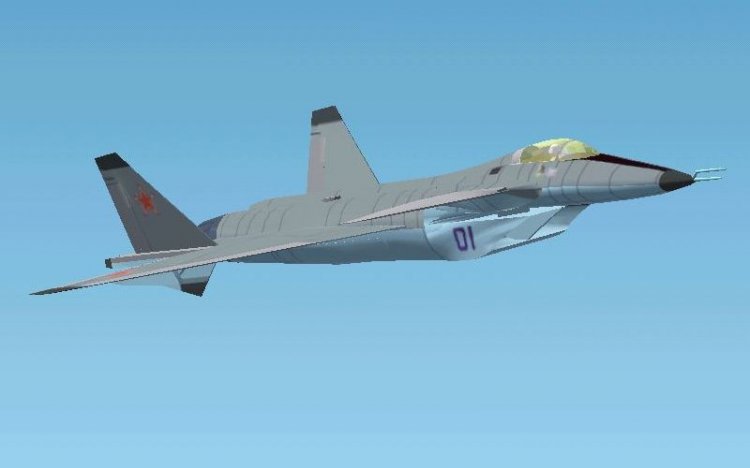
One of the interesting projects. Full version. Installation: copy MFI folder to "aircraft" folder. Then copy MFI/Mig-35 to the same folder as previous.
→ Size:
342 KB
→ Date:
20 years ago (30.10.2005 21:19)
→ Author:
Wolf.ram
→ License:
Freeware - Free version, Unlimited Distribution
→ Downloaded:
3285 time(s)